

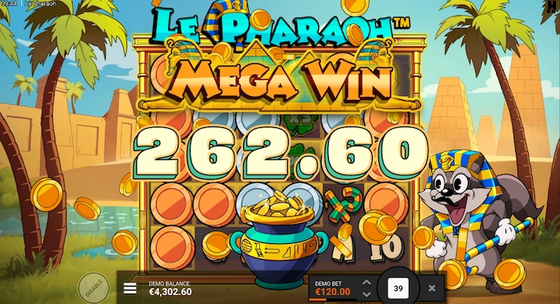





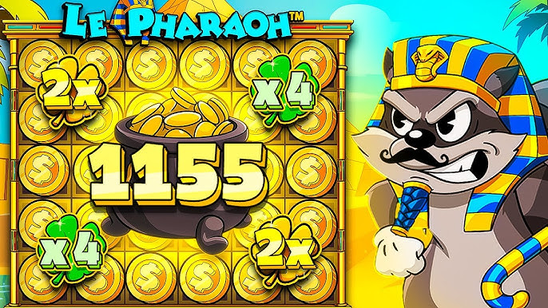
Le Pharaoh Max Win I Max Win Le Pharaoh
Find out how to set limits, test stakes, and use account tools in Le Pharaoh in Poland, without rushing.
How to Understand the Maximum Win Limit in the Game
The maximum possible win is a limit built into the game rules, not a plan for the evening. Imagine this situation: you hit several wins in a row and the thought comes to mind that “today is the day”. It is precisely then that it is worth returning to the simple question: are you playing according to budget, or according to emotions?
In 2026, most platforms operate based on clear security procedures and age requirements, and gameplay is intended to remain entertainment. Therefore, it makes sense to treat the "upper limit" as information about the game, just like tempo, stakes, or special features. There is no magic here. There is mechanics, outcome variability, and your decisions: how long you play, what stake you choose, when you take a break, whether you stick to your account limits.
The most common misunderstanding is that the player confuses the limit with a promise. The limit only says: "Above this value, the game will not charge more in a single round or feature". That's all. If you approach this soberly, it is easier to plan a session without nerves and without chasing something that by definition happens rarely.
Top casinos for playing Le Pharaoh — current list
Le Pharaoh Bonus What It Usually Means For A Session
Promotions are great until they start controlling your moves. Imagine seeing an opening offer, feeling the pressure "not to miss it", so you make a deposit faster than usual and only then read the terms. This is the typical moment when the player complicates their evening themselves.
The most sensible approach is short: treat the offer as an extra, not as a reason to increase risk. If the platform in Poland offers promotions, they usually go hand in hand with account requirements, data verification, and responsible gaming tools. In practice, this means that before you start "using" it, it's worth checking three things: the session time limit, the deposit limit, and whether you understand the rules for settling promotional funds (without adding anything that isn't in the description).
It's also good to remember psychology. A promotion can be a trigger for longer play, because "I have additional funds". If you see that you are starting to extend the session just because an offer has appeared, stop. Take a break, quickly count your budget, and then decide whether to play on.
How To Set Up A Session To Avoid Playing On Impulse
Before you start playing for real money, set the framework. Imagine a situation: you sit down "for a moment", and after an hour you realize that you don't even remember how much this playing was supposed to cost. This scenario doesn't stem from a lack of knowledge, but from a lack of settings that work automatically.
In Le Pharaoh in Poland it's worth approaching the session like a simple plan: time, budget, ending rule. Short sentences, zero negotiations during. If you want to add one more thing, let it be a break in the middle – a real one, without a screen, to break the clicking rhythm.
How To Adjust The Bet To The Entertainment Budget
Start with an amount whose loss won't ruin your day. It sounds harsh, but it works. Imagine you're playing after work and want to relax, not test your stress tolerance – then the bet must fit your comfort, not your dreams of "hitting the jackpot".
The practical method is simple: divide your budget into segments and decide how many rounds you want to play in one segment. If you see that the balance is dropping too quickly at a given bet, it's not a sign that you "have to hit it", but that the bet is too high for the pace you like. Change it before emotions do it for you.
How To Plan A Break And The Moment Of Ending
Usually, players only take a break when they are tired. And then it's too late. Imagine that everything is going fast, you are clicking automatically, and a break seems like a waste of time – it is precisely at this moment that a break saves the budget.
Set the end of the session in advance: after a certain time or after a specific number of rounds. And stick to it, even if "it's going well". This is paradoxically the best way to not give the result back. And if you want to return to play, come back after a break, with a new decision and a new time limit.
Signals That You Need To Slow Down
The simplest signal is haste. You stop reading messages, skip summaries, try again without thinking. Imagine catching yourself thinking "just three more times and I'll stop", but after those three times you add more – this is a sign that the rhythm is controlling you, not the plan.
The second signal is a change of stake "without reason". If the hand goes up by itself because you want to feel emotions faster, it's better to stop, take a break, and only return when the decision is conscious.
How to Use Account Tools in 2026
In 2026, responsible gaming tools are practical if you use them before starting, not in the middle of nerves. Imagine you want to stop, but "it's a shame to finish because maybe a feature will come soon" - then a time limit or session lock does the job for you.
Set deposit and time limits as if you were having a bad day, not a good one. A good practice is also to turn on time reminders, because they break the automatism. And if you see that you are returning to the game out of momentum, use the time break option - it's not a punishment, just hygiene.
Registration, Verification, and Payments Without Stress
Most of the tension arises not with the spins themselves, but with the account: registration, confirmations, withdrawals. Imagine a situation: you just want to play briefly, and the system asks for additional steps and suddenly you feel irritation. It's better to approach it as one calm stage - you do it once, and then you have a clean account and fewer problems.
Platforms available on Poland usually apply security procedures and requirements for adults. This means that sometimes there will be a data verification or confirmation of the payment method. Instead of fighting with it in a hurry, take a few minutes: check if the data in the profile is consistent, if you have access to the payment method, and if you understand the account limits.
Area | What the Player Does in Practice | What to Check Before Clicking | What Time Depends On |
Registration | Enters data and confirms contact | Correctness of data, consistent spelling of first and last name | Account stage and required confirmations |
Deposit | Selects method and amount | Deposit limits, authorization in the banking app, no rush | Payment method and confirmations |
Withdrawal | Places an order and waits for status | Data consistency, required documents, minimum thresholds | Security procedures and payment method operator |
Limits | Sets time and budget | Do the limits fit your habits | Account settings and selected options |
Support | Reports a problem or question | Description of the situation, approximate time, error message | Contact channel load |
How to Go Through Registration Without Mistakes
The most common mistake is typos and inconsistent data. Imagine you open an account quickly because "it's just a formality", and later, when withdrawing, it turns out that the spelling differs from the document. It's not a drama, but it can lengthen the process and spoil the mood.
Do it calmly: enter the data as in the document, check it twice, only then confirm. If the platform asks for additional verifications, treat it as a security step, not an obstacle. One proper step at the beginning usually saves several steps later.
How to Deposit Funds With Control
It's best to stick to one method that you use daily. Imagine you change methods "because it will be faster", and then you get lost in confirmations and limits. Fewer variables mean fewer problems.
Set a rule: do not increase the amount in the same session without interruption. If you want to add funds, take a break, check the budget, reset the time limit, and only then make a decision. It sounds rigid, but it's precisely these simple frameworks that protect against playing on impulse.
How to request a withdrawal and not get stuck on the details
Withdrawal likes data consistency and patience. Imagine that after a good session you want to “have everything closed”, and then a status appears requiring additional confirmation. Usually it's about security: profile compliance, method confirmation, possible documents.
Before requesting a withdrawal, check your profile and transaction history. If you need to confirm your identity, prepare clear materials and send them once, properly. In practice, it goes fastest when there are no corrections or missing elements.
Strategy for Approaching Promotions Without Rushing
Promotions can pick up the pace, and pace likes to spoil the plan. Imagine a situation: you have a set budget, but an offer appears and suddenly you think “I'll add a bit more, because it's a shame to miss the opportunity”. This is a classic turning point where entertainment starts to take control.
To avoid this, treat the promotion as a separate decision. First, you check your account limits. Then you decide if that offer fits your playing style. Only at the end do you consider depositing. Pay attention to simple things: do you need to take additional steps, are there time limits, are the conditions clear? If you feel the offer is causing pressure, it's better to skip it – it will still be normal entertainment, without nerves.
How to Read Offer Terms So They Don't Surprise You
It's best to read the terms in a moment of calm, not during gameplay. Imagine seeing a message about a promotion, clicking automatically, and then wondering why the funds work differently than you thought. This is a mistake that comes from haste, not lack of intelligence.
Look for answers to three questions: how to activate the offer, what are the limitations, when does the validity period end. If you don't understand something, don't interpret it yourself. It's better to stop, ask support, and return to the topic after a while.
What to Do When an Offer Tempts You to Play Too Long
This happens more often than people admit. Imagine you planned for 20 minutes, and the offer makes you want to “use it to the end”. Then go back to the settings: time limit, break, possibly a block for the rest of the day.
The simplest rule is separation: you test the offer in one short session only, without adding funds during. If you still feel like it after the session, come back after a break. This way you won't fall into the mode of constantly clicking “because I haven't finished yet”.
How to Combine Promotions With Responsible Gaming
A promotion should not change your limits, but operate within their boundaries. Imagine you have a set budget and suddenly raise it because “it's a special occasion”. This most often ends with a worse feeling, regardless of the outcome.
It's better to do the opposite: limits are fixed, and the offer must adapt to them. If it doesn't fit – skip it. In 2026, tools like time-out or self-exclusion are available to be used without shame. If you feel that gaming is getting out of hand, technical settings are faster than talking to yourself.
When is it worth taking a break instead of continuing to play?
The best time for a break is not defeat, but emotion. Imagine you are in the plus and feel "it's a shame to finish". This is exactly when many players give the result back, because they want a little more.
Take a break when you notice haste, the desire to immediately make up for losses, or sudden increases in stakes. If you find it hard to stop, set a time lock and return to the game another time with a clear head. This is not an escape - it's control.
Summary and Simple Plan for a Session in Le Pharaoh
The best plan is one that can be executed in real life, not just on paper. Imagine you have an evening free in Poland, you want a bit of entertainment and you care about peace, not a rush. Then three things work: account settings, a steady pace, and ending the session according to plan.
Le Pharaoh is available in Poland for adults and should be used as part of responsible gaming. Instead of thinking about records, think about the process: registration without typos, deposit within the limit, test of game pace, break in the middle, withdrawal without rush, contact with support when something is unclear. These are simple moves, but they decide whether the session ends with peace or frustration.
20-Minute Plan That Most Often Works
Set a time limit for one short session, set a deposit limit at the level of the entertainment budget, and choose a stake at which the pace is not tiring. Imagine finishing after the time is up even when "it's going well" - that's what control means. After the session, take a break, check the game history, and only then decide whether to return another time or close the topic for today.
Frequently Asked Questions
How to set a deposit limit before starting to play?
It's best to do this before you start the session, when you are calm and don't feel the pressure of the result. Imagine starting to play without a limit, and then emotions rise and the desire to "add more" appears - then the previously set limit cuts off the impulse. In practice, you set an amount for a day or a week, adjust it to your entertainment budget, and if you tend to have longer sessions, add a time limit as well.
Can I play just for fun and quickly end the session?
Yes, but the framework is key, not good intentions. Imagine planning 15 minutes, and after 15 minutes you tell yourself "a little more" - that's normal, which is why reminders and a time limit are important. If you stick to the rule of finishing after the time is up or after a certain number of rounds, the session stops spilling over, and you don't have to negotiate with yourself in the process.
What to do when a transaction has a pending status?
First, check the details in the transaction history and make sure the account details are consistent, as this is the most common reason for holds. Imagine withdrawing after a successful session and wanting immediate confirmation - but the payment method requires additional authorization or data verification. Patience, complete information, and contacting support usually help if the status doesn't change for a long time or the message is unclear.
How to recognize that I am playing impulsively and not consciously?
You can usually tell by the rush and hasty decisions. Imagine clicking faster, stopping looking at your balance, and catching yourself thinking "I'll win it back now" – that's a signal for a break. Simple observation also helps: do you change your bet without a plan, add funds in the same session, or ignore time reminders? If the answer is "yes", take a break and come back after a rest.
When is it worth using a time-out or a block?
When you notice that it's difficult to end a session on your own. Imagine repeating "this is the last round", but after it, you start another one – the block is there to break this pattern without discussion. A time-out works well when you want to cool off for a few hours or days, and a longer block makes sense when gambling starts to affect your sleep, mood, or budget.
How to approach a promotion without increasing risk?
Treat the offer as an addition, not a reason to change your limits. Imagine seeing a promotion and immediately wanting to play longer because "it would be a shame not to take advantage of it" – this is when the risk increases the most. The best practice is a steady plan: account limits unchanged, one short test session, no adding funds during, and if you still feel like it after the session, come back only after a break and with a new decision.