

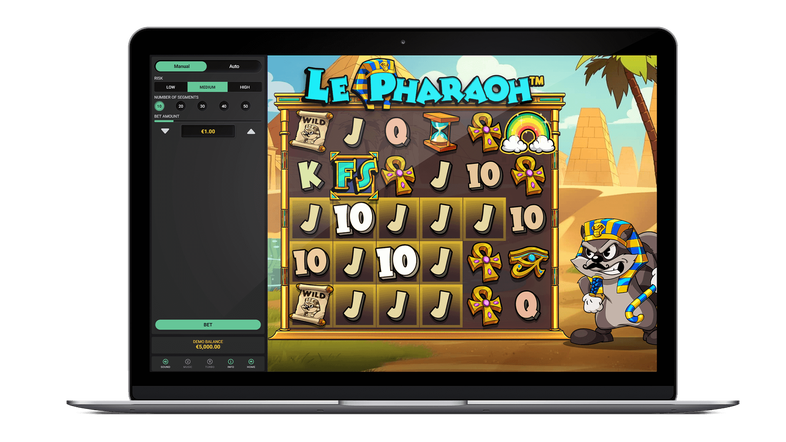






Le Pharaoh Game - Review And Rules
Learn the mechanics of Le Pharaoh, set stakes and limits, check payments, and play consciously in Poland as an adult.
How to Read Le Pharaoh Game Before Starting
Before you even click the first round, do one thing: decide why you are playing – for relaxation, to test a session strategy, or simply out of curiosity. Imagine a situation: you have twenty minutes of break, you turn on a slot machine and want to "quickly check" how it's running, but after a few spins, the thought comes that it would be a shame to stop, since you've already spent so much time. That's when the plan is more important than emotion.
Game descriptions often mention theoretical return and volatility, but for the player, practice counts: how quickly the budget can shrink at a given bet setting and how often small wins appear that maintain momentum. Instead of treating statistics as a promise, treat them as a map – they show the landscape, but don't tell you if it will rain in that specific minute. Therefore, it's worth starting with a short trial at minimum settings, and only then building a longer session.
A good habit to start with is to separate two things: entertainment and money "for life". The budget for playing should be separate, set in advance, and small enough that you don't have to explain anything after a loss. If you feel yourself getting into a chase mode, stop immediately – not after "just one more" round, but now, while you have control.
Finally, check the control tools in your account panel: time limits, spending limits, breaks, and temporary lockout options. On platforms available in Poland, this usually works within the applicable rules and requirements for adults, so it's better to set safeguards early than to look for them in the heat of the moment.
Top casinos for playing Le Pharaoh — current list
Le Pharaoh In Poland - First Steps Without Stress
Getting into the game can be simple, but "simple" doesn't mean "problem-free" if you do everything in a hurry. Imagine a situation: you register an account, immediately deposit funds, start a slot machine, and only then do you see that you're missing limit settings or don't know where the transaction history is. The result? Instead of playing calmly, you start searching for features mid-game.
The best order is: account and security, limits, game test, only then a longer session. If the platform asks you to complete data or confirm during withdrawals, treat it as a standard procedure for order and protection, not an obstacle. The fewer data corrections later, the less stress when you want to end the session and sort out your funds.
In practice, many players make a short checklist before the first session. You set a time limit (so as not to drift off), establish a daily or weekly budget (so as not to overdo it), and then test the game for about ten minutes. If you're playing on a phone, also check connection stability and how the game behaves after an interruption – connection, phone, notifications. Imagine someone calls, you return to the app and no longer remember what your bet was – that's why it's worth keeping one base bet and not mixing settings.
W Poland szczególnie ważna jest odpowiedzialność: gra jest dla osób pełnoletnich i powinna pozostać rozrywką, nie sposobem na „odrabianie”. Jeśli czujesz, że grasz w złym nastroju, lepiej przesunąć sesję na inny dzień. To nie brzmi spektakularnie, ale jest najbardziej praktyczną strategią.
Mechanika Automatu Le Pharaoh I Realne Decyzje
A slot machine can seem intuitive, but the player's decisions only begin when you understand the rhythm of the rounds and what actually affects the budget's pace. Imagine a situation: you see spectacular animations, feel like "something is building," and start playing faster because you don't want to miss the moment. The problem is that animations build atmosphere, not results – the result is random, and your control lies in the bet, time, and breaks.
First, learn the basics: how combinations are counted, what triggers special features, and whether the game has elements like wild symbols, bonus rounds, or multipliers. You don't need to make a lecture out of it – it's enough that you know what a "normal round" is and what is a "mode where it's easy to lose control." For many people, this mode is autoplay or a fast pace, because the finger clicks before the head can assess the situation.
The second thing is the way the game "tempts" you to change your behavior. Often, the impression arises that you're just one symbol away from a bigger hit. Imagine you have a series of rounds where it "almost" worked out – then the temptation grows to raise the bet because it's "close." In reality, closeness is an impression, not an advantage. If you notice this moment, instead of raising, slow down and set a time limit for the next few minutes.
Finally, remember that a game review isn't just about "do I like it," but also "can I control it." If after fifteen minutes you feel like you're losing track, it's a sign that you need a more rigorous session plan or simply shorter sessions.
Bet Settings And Round Pace In Practice
The bet is not a luck knob, but a regulator of spending pace. Imagine a situation: you lose a few rounds and suddenly the thought comes up to raise the bet "for a moment" to get back to zero faster. This usually shortens the session time and increases tension, rather than providing better control.
A division into two levels works best: base bet and test bet. The base bet is for most rounds – one at which you can play without stress and without the desire for immediate change. The test bet is for short trials when you want to check how you feel a different dynamic, but with a clear limit: a defined number of rounds and the end of the test. After the test, you return to the base bet or end the session, without "making up for losses."
The pace of the rounds also matters. If you play on mobile, it's easy to fall into fast clicking because the app runs smoothly and nothing holds you back. Give yourself a handbrake: turn off autoplay, slow down animations, do short series of a few rounds. Surprisingly, this is often enough to stop playing impulsively.
Volatility, Emotions, And Session End Plan
Volatility is felt most strongly in emotions: sometimes it goes smoothly, sometimes you hit a longer "dry" spell and irritation sets in. Imagine a situation: you're playing calmly, but after a series without clear wins, you start thinking you need to change something – the bet, the game, the time. That's when an exit plan comes in handy, because a plan is stable, an emotion is not.
Set two limits: a loss limit and a profit limit, after which you stop. It doesn't have to be complicated - the important thing is that it's realistic and you keep it in mind before you start. When you hit a good streak, the most common trap is "one more round, because today is a good day". Today might be a good day, but your goal is to finish on your own terms.
A break rule after a strong stimulus also helps - after a larger win or after a longer losing streak. You get up, take a minute break, look at the game history, and only then return. If you still want to play after the break, it's a decision, not a reflex.
What to Note After a Session to Draw Conclusions
If you want to truly assess how you play, you need a short note, not impressions from memory. Write down three things: the duration of the session, the number of bet changes, and the moment the urge to chase appeared. This is enough to see patterns: do you increase the bet after losses, play longer when you're tired, or add funds mid-session.
Imagine you only remember one larger win and based on that consider it "okay". The history and notes often show something else - that win came after a series of nervous changes. Thanks to the notes, the next session is simpler: you return to the base bet, shorten the time, and set the break earlier.
Timeout and Self-Exclusion as a Safeguard
Timeouts and blocks are not a punishment, but a tool. If you feel yourself entering the "making up for losses" mode, that's exactly when it's worth using a timeout. The biggest problem is that in the heat of the moment, you usually set the break too short. That's why it's better to think about it beforehand - calmly, without pressure.
Self-exclusion makes sense when you see a recurring pattern: playing at the expense of obligations, hiding the time spent, constantly adding funds despite a plan. Imagine a situation: you return to the game not because you want to, but because you "have to recover". Then the healthiest move is to cut off the stimulus. For adults, this is a normal part of responsible gaming, especially when the platform operates within the rules and offers control tools.
Payments and Withdrawals - Order Before Pressure Begins
Money in the game should be in order before emotions arise. Imagine a situation: you deposit quickly, everything works, and when you want to withdraw after a successful session, it turns out that the data confirmation is missing or you don't know where to check the transaction status. This is not a moment for improvisation.
First, choose a method that suits your habits. If you value predictability, choose a solution with a clear history and a smooth process. If mobile convenience is important, choose a method that is easy to confirm on your phone. In every option, follow one rule: do not mix multiple methods in one session, because it is harder to assess what happened and when later.
Below you have a practical table that helps you manage the process without pretentiousness and without "on time" promises - because the processing time can vary and depends on the method and security procedures.
Area | What to Check Before Starting | Typical Dynamics | What Can Lengthen the Duration | Simple Habit |
Top Up Balance | Consistency of profile data | Often fast | Weak connection, missing confirmations | Immediately after the operation check the history |
Withdraw Funds | Is the method consistent with the data | Dependent on the method | Additional verifications, profile changes | Submit one request and track its status |
Account Limits | Are the limits realistic | Works immediately after setting | Limits too high "by eye" | Set a time and weekly budget limit |
Login Security | Additional account protection | Permanent security | Weak password, no device lock | Log out after the session, keep an eye on the device |
Contact Support | Specific information about the problem | Faster when there is order | Chaotic descriptions, missing event data | Describe the steps, time, and device |
Deposit Step By Step Without Impulses
The deposit should result from the session plan, not from emotions. Imagine a situation: you lose several rounds and the thought comes up: "I'll add more because it's a shame to stop". Stop and do a quick check: has your session plan changed, or is the tension just growing?
Follow the scheme: choose the method, enter the amount, confirm, and then immediately check the transaction history. If you're playing on mobile, do it on a stable connection so you don't repeat the operation "just in case". Then set a time limit for the rest of the session – it's a simple brake that reminds you that entertainment should have an end.
If you use promotions, read the terms directly: stake limits, time for use, settlement rules. If something is unclear, the calmer option is to play without promotions or take a break and then decide. Haste in finances most often ends in frustration.
Withdrawal Without Surprises And Without Rush
Withdrawals proceed most calmly when the profile is in order. Imagine a situation: you have a good result, you want to end the session, but you are missing one step in the data and you start clicking nervously and changing methods. This rarely speeds things up.
Before requesting a withdrawal, check three things: data consistency, the chosen method, and transaction history. Submit one request and wait for the status, instead of sending several "just in case". If a request for additional confirmation appears, treat it as a standard security procedure for adults, not as an obstacle.
Many players choose a steady rhythm: withdrawal after the session ends or after a week. This way, you don't mix money decisions with game emotions. It's a simple move that improves control and reduces the number of nervous decisions.
Account Security And Privacy In 2026
Security is about concrete habits, not declarations. Imagine a situation: you leave your account logged in on a computer, someone "just takes a quick look" and makes unwanted moves. It only takes a moment to create a problem that you can't fix with a single click.
Take care of your password, device lock, and logging out after the session. If additional login protection is available, it's worth enabling it as it reduces the risk of account takeover. On your phone, disable saving sensitive data in random places and don't share the device "for a moment" when you are logged in.
In case of suspicious activity, react immediately: change your password, interrupt sessions, and contact support, describing the event factually. The less panic, the faster you return to order.

Session Strategy - Budget, Breaks And Decisions
Strategy in slot machines is not about predicting the outcome, but about managing time and budget. Imagine a situation: you start calmly, then a series of losses occurs and suddenly you play faster, more expensively, more nervously. This is not a plan – it's a reaction.
Short sessions work best. Instead of one long session, take two shorter ones with a break in between. The break doesn't have to be big – a minute without the screen is enough for emotions to subside. During the break, look at the history and check if you are sticking to the base stake. If not, return to it or end.
It is also important when you change the game parameters. Changing the stake, changing the pace, changing the title – each such decision should have a reason other than frustration. If the reason is "because I have to recover", the best move is a timeout. Surprisingly, many players only see later that this was the turning point.
Plan for 20 minutes for relaxed play
A simple plan brings peace. Imagine a situation: you have twenty minutes, you want to unwind and not think about anything difficult. Set the timer, choose your base bet, and for the first ten minutes, don't change anything – neither the bet nor the pace.
After ten minutes, take a one-minute break and only then decide if you want to continue. If you feel you've started clicking automatically, end the session. If you are still playing consciously, you can continue the second part, but keeping the same bet.
At the end, exit the game deliberately. Look at the history and note one sentence: did you have the temptation to raise the bet and when? This one note does more than ten general tips.
When to Change Games and When to Simply Stop
Changing games can be sensible, but it can also be an escape. Imagine a situation: after a losing streak, you think "this game isn't giving anything" and look for a new one, hoping for an immediate return. This often transfers the same impulse to another title.
Changing makes sense when it comes to comfort: the pace is too fast, the mechanics are unclear, and you feel you're losing control. Then you choose a calmer option and return to the base bet. However, if you feel anger or tension, the best decision is a break, not a new title.
The rule helps: if you want to change games after an emotion, take a five-minute break first. After the break, it often turns out that you don't need a change – you need to end the session.
How to Use History and Limits Without Self-Deception
History is stubborn: it shows the time, frequency of changes, and whether you added funds mid-session. Imagine a situation: you remember one larger win and consider the session successful based on that, but history shows that you had raised the bet several times after losses before. This is the difference between an impression and facts.
Look at three indicators: session time, number of bet changes, and the moments when the urge to "add more" arises. If you see that bet changes are mainly after losses, strengthen the limits and shorten the session. If you add funds mid-session, it's a sign that the initial budget was too small or the plan too loose.
Limits should work in practice, not on paper. It's better to set a smaller, realistic limit and stick to it than to set a huge one "just in case" and pretend it's control.
Where to Seek Help When Emotions Escalate
When emotions start to dominate, the best support is break and block tools and a conversation with someone trusted. Imagine a situation: you're playing alone, irritation is growing, and no one sees you crossing your own rules. Then a break acts like a reset.
If the platform has a timeout option, use it without hesitation. If you see a recurring problem, consider a longer block. These are normal solutions for adult users who want gaming to remain entertainment.
It is also advisable to establish a simple rule: "no playing when in a bad state": no playing when you are tired, upset, or after drinking alcohol. This is not moralizing – it is a practice that most often saves the budget.
Support & Problems - How to Act Without Panic
Technical problems, questions about transactions, or ambiguities in settings happen to everyone. Imagine a situation: the game freezes, you refresh, and stress arises in your head that "something has happened to the funds". In such moments, procedure wins, not emotion.
First, check the basics: connection, restart the application, log out and log back in. Then look at the transaction history and game history to see what actually happened. If the issue concerns a withdrawal, do not change the method in the meantime and do not submit multiple requests – this is a common reason for confusion.
When you write to support, keep everything in one thread and describe it with facts. The more concrete the description, the fewer follow-up questions there will be, and the faster you will get a solution.
How to Write to Support to Get a Concrete Answer
Concreteness shortens the way. Imagine a situation: you send a message "it doesn't work" and wait for support to ask for details – you lose time and frustration grows. Instead, describe: what you did step by step, on which device, at what time, and what exactly you saw.
Add information on whether the problem concerns login, the game, or a transaction, and whether you have tried restarting and logging in again. If you see an operation ID in the history, provide it without revealing sensitive data. At the end, ask one specific question: "What is the status?" or "What step should I take next?", instead of several topics at once.
This style of communication works best because support sees the context and can immediately enter the appropriate process. And you gain peace of mind – even if the answer takes a moment.
Frequently Asked Questions
How to start a session in Le Pharaoh without rushing?
First set a time and budget limit, then do a short test with minimal settings, and only then consider playing longer. Imagine you only have a quarter of an hour break – then it's easier to stick to the plan and not fall into clicking "on autopilot". After the test, check the history and note whether you had the temptation to change the stake, because that's the quickest signal of how the game affects your emotions.
What to do when the urge to recoup losses arises?
Stop and take a break, even a short one, before making another decision. Imagine a situation: several unsuccessful rounds in a row and the thought that you have to immediately get back to zero – this is a typical impulse that ends with raising the stake without a plan. Return to the base stake, set a time limit of a few minutes, and if the tension doesn't decrease, use a timeout.
How to set limits so they actually help?
Limits must be realistic, otherwise they are just decoration. Set a session time limit and a weekly spending limit so that you can stick to it without scheming. Imagine you are playing late at night and losing track – then the time limit is like an alarm clock that pulls you out of autopilot. If you regularly exceed limits, it's a sign that they are too high or you are playing in too emotional a state.
When is it better to take a longer break instead of a short pause?
A longer break makes sense when you see a repetitive pattern: rushing, adding funds, playing despite fatigue, and feeling like you're not in control of time. Imagine returning to the game not because you want to, but because you "have to win back" – that's a warning sign. Then it's better to set a longer timeout or a block and return only when emotions have calmed down.
How to play safely on the phone and not lose track of operations?
Always check the history after each deposit and withdrawal and avoid playing on a weak connection when you risk interrupting in the middle. Imagine the internet cuts out and you're tempted to click a second time – then the history is your only calm source of order. Keep one payment method within a session, log out after finishing, and don't share your phone when you're logged in.
How to prepare for a withdrawal to avoid stress?
Organize your profile in advance, and request the withdrawal after finishing the session, when you are not mixing emotions with financial decisions. Imagine a situation: you want to quickly close the game after a successful moment, but you are missing one step in the data – then haste and nervousness arise. Submit one request, track its status, and don't change the method in between, because calm and consistency usually shorten the path to a solution.